The Real Truth: D Link D501 5G Adapter or Popsa Photo Book?
Short answer: these two products serve fundamentally different needs—one is a hardware solution for internet connectivity, the other is a physical photo-printing service—so the "better" choice depends entirely on what the buyer needs. For people who prioritize mobile broadband, remote-work reliability, or failover internet, the D Link D501 5G adapter will be the practical pick. For those seeking a tactile, lasting way to preserve and share memories, the Popsa photo book is the natural choice.
Introduction
Readers shopping in the Electronics category sometimes face unexpected comparisons: a piece of connectivity hardware on one side and a personalized printed product on the other. The D Link D501 5G adapter and the Popsa photo book are not competitors in the traditional sense, but juxtaposing them clarifies how different priorities—connectivity versus physical keepsakes—translate into different buying criteria. This article examines each product in realistic, real-world terms: how people actually use them, what buyers typically care about, the trade-offs to expect, and practical guidance for choosing the one that best matches a buyer's needs.
Product overviews
D Link D501 5G Adapter — what it is and who it's for
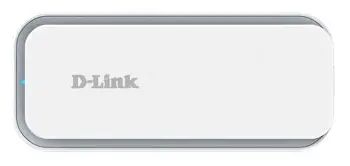
The D Link D501 5G adapter is a portable cellular modem designed to bring mobile broadband to a laptop, desktop, or compatible router via a USB connection (or alternate interface depending on the model). It enables access to 5G networks where available, and falls back to 4G/LTE in areas without 5G coverage. Typical buyers are remote workers, small-business owners needing a failover link, frequent travelers, or households in areas with unreliable wired internet.
Key real-world strengths include rapid setup (insert SIM, plug into a device, configure minimal drivers or web UI), portability for on-the-go use, and the ability to leverage carrier plans already in use on a phone or dedicated data plan. Practical caveats include dependence on carrier network availability, data-plan costs, and potential OS/driver considerations for certain laptops or operating system versions.
Popsa Photo Book — what it is and who it's for
Popsa is a consumer-oriented photo-book printing service with mobile and web apps that automate layout and printing. Users upload photos, choose book sizes and covers, and Popsa handles layout, color management, and printing. Buyers typically include parents, travelers, hobby photographers, couples creating wedding albums, and anyone looking for a tangible gift that holds emotional value.
Real-world advantages are immediacy and ease—many users appreciate that the service automates layout and reduces the manual work of arranging dozens of photos. Drawbacks people commonly mention include occasional mismatches between on-screen color and printed color, the need to prepare high-resolution images to avoid soft prints, and turnaround times that depend on shipping rather than instant gratification.
Detailed product analysis
Performance and reliability
For the D Link D501, performance is tied to two things: the quality of the modem and the strength of the local cellular network. In city centers with robust 5G coverage the adapter can provide stable, low-latency connectivity sufficient for video conferencing, cloud backups, and even light streaming. In suburban or rural areas where 5G is patchy, the adapter still provides value by falling back to LTE. Buyers should expect variable throughput depending on congestion and distance to the nearest tower.
Find top-rated Electronics products at great prices.
See Deals →For Popsa, "performance" equates to print fidelity, build quality, and delivery reliability. In practice, a well-made Popsa photo book will hold up as a coffee-table item or a gift, with finishes and bindings chosen at purchase determining longevity. Users who care most about archival quality should pay attention to paper weight and cover type at checkout; those details directly affect how well a book resists wear over years of handling.
Ease of setup and daily use
The D Link adapter is straightforward for users comfortable with basic hardware setup: insert SIM, connect via USB, install drivers or use the built-in OS networking UI. Technical buyers may appreciate advanced options such as firmware updates, manual APN configuration, and diagnostic tools. Less technical users may need help ensuring carrier compatibility and selecting an appropriate data plan.
Popsa’s workflow is aimed at minimal friction: upload photos via the mobile app, let the app auto-arrange layouts, perform light edits if desired, and choose finishes. This simplicity makes Popsa attractive to users without design skills who nonetheless want a polished product. Photographers seeking fine-grained control over layout and color may find the automated approach limiting and might prefer desktop publishing tools followed by a professional print lab.
Cost of ownership
The D Link adapter has an initial hardware cost and then ongoing data-plan costs. Buyers who already have a flexible data plan can minimize recurring expense by tethering to an existing SIM; others will need to budget for a separate data allowance. Consider also the potential need for external antennas or signal boosters in low-signal areas.
Popsa’s costs are per-book and depend on size, page count, paper type, and shipping. There’s no recurring expense unless the buyer regularly orders prints. In the long term, Popsa delivers a tangible product that may be kept for decades with appropriate care, making cost-per-use favorable for sentimental purchases.
Privacy, security, and support
With the D Link adapter, security considerations matter: buyers must ensure they use secure protocols (VPN for public hotspots), keep modem firmware updated, and be aware of carrier-imposed data monitoring. Good device support and firmware updates from the manufacturer are important—buyers should check the vendor's support policy before purchase.
Discover deals on Electronics — updated daily.
View Offers →Popsa handles user photos and personal data; users should review the service’s privacy policy where available and prefer platforms that process images securely and avoid broad rights-granting for user content. Support responsiveness matters if a print arrives damaged or color is unacceptable—buyers should expect a clear returns/reprint process.
Pros & Cons
D Link D501 5G Adapter
- Pro: Provides mobile broadband where wired internet is unavailable or unreliable.
- Pro: Portable and easy to deploy for travel or temporary setups.
- Pro: Offers modern cellular connectivity with fallback to LTE.
- Con: Performance varies by carrier coverage and congestion.
- Con: Requires a data plan—ongoing costs can be significant for heavy users.
- Con: Potential driver or compatibility issues on some systems; firmware updates may be needed.
Popsa Photo Book
- Pro: Quick, automated workflow for creating attractive photo books without design skills.
- Pro: Produces a tangible, giftable product that many buyers find emotionally valuable.
- Pro: Multiple size and cover options allow personalization.
- Con: Print colors may differ from on-screen previews without careful color management.
- Con: Turnaround time depends on production and shipping; not instant.
- Con: Less control for users who want pixel-perfect layout or archival-grade materials unless specifically selected.
Side-by-side comparison
| Attribute | D Link D501 5G Adapter | Popsa Photo Book |
|---|---|---|
| Purpose | Deliver mobile broadband to a device | Create a printed photo album |
| Primary use cases | Remote work, travel connectivity, failover internet | Gifts, memory keeping, photo portfolios, travel albums |
| Portability | Highly portable; small dongle or modem | Not portable in the same sense; physical product to be carried or mailed |
| Upfront cost | Hardware purchase required | Cost per book varies by size and options |
| Ongoing costs | Recurring data plan fees | Occasional orders for new books |
| Technical complexity | Moderate — compatibility and APN settings matter | Low — app-driven with templates |
| Longevity | Dependent on device lifespan and carrier support | Potentially decades with quality materials |
| Best for | Users needing internet access away from wired connections | Users wanting a physical keepsake or gift |
Buying guide — how to choose between them
Choosing between a 5G adapter and a photo book is not a straightforward “this vs. that” decision because they satisfy different needs. Below are decision points and practical advice for buyers evaluating either product.
For buyers considering the D Link D501 5G adapter
- Assess coverage where you use it most: Check the availability of 5G and LTE from local carriers at home, work, and travel destinations. A 5G adapter is only useful if network coverage is adequate.
- Confirm carrier compatibility: Verify supported frequency bands and whether the adapter is locked to a carrier. If unsure, consult the device documentation or vendor support to confirm it will work with the intended SIM.
- Plan your data needs: Estimate monthly data usage for video calls, streaming, and backups. Heavy users should budget for generous data plans or unlimited options to avoid bill shock.
- Check OS & driver support: Review compatibility notes for Windows, macOS, and Linux. Some adapters require vendor drivers; others present as a standard network interface.
- Consider security and firmware: Look for a device that receives firmware updates and supports secure networking practices. For regular public hotspot use, combine the adapter with a VPN.
- Evaluate physical needs: If signal is weak, consider models that support external antennas or check whether a signal booster will be necessary.
For buyers considering a Popsa photo book
- Choose images wisely: Use high-resolution photos to avoid pixelation. The service will often warn about low-resolution images during upload.
- Preview carefully: Take time to review auto-layouts and adjust image cropping when necessary. Pay attention to image bleed areas and margins to avoid losing important content at the binding edge.
- Select paper and cover based on use: Heavier paper and hardcover bindings are better for long-term keepsakes; softcovers may be sufficient for casual albums.
- Mind color and editing: If color fidelity is critical, apply conservative edits and use sRGB images. Consider ordering a single proof copy before placing multiple orders.
- Plan timeline: Account for production and shipping times if the book is intended as a gift for a specific date.
- Read return/reprint policies: Understand the company’s policy for damaged or misprinted books and how to request reprints or refunds.
Decision checklist
- If daily internet access away from reliable wired connections is essential: lean toward the D Link D501 5G adapter.
- If creating a durable, emotional gift or preserving photos in physical form is the goal: choose the Popsa photo book.
- For buyers who value both connectivity and memories, both products may make sense—one solves a technical need, the other preserves moments.
Real-world scenarios
To make the decision more concrete, consider two typical buyer profiles:
- The traveling creative: A freelance photographer on the road values reliable upload connectivity to back up images and send proofs. The 5G adapter reduces dependence on hotel Wi‑Fi, while a Popsa photo book can be an occasional product to sell or gift—but it is not a daily essential.
- The busy parent: Someone juggling work and family might need the D Link adapter for a dependable work-from-home backup connection when the home ISP fails. They might also order Popsa books occasionally to turn a year's worth of family photos into a keepsake—but the two purchases serve different moments.
Conclusion
In short, the D Link D501 5G adapter and the Popsa photo book are each valuable in their domains. The adapter is a pragmatic electronics purchase for anyone who needs mobile broadband, failover connectivity, or travel-ready internet access. The Popsa photo book is a consumer-friendly service for producing polished physical albums with minimal design effort. Buyers should choose based on immediate needs: if uninterrupted connectivity and internet performance are the priority, the adapter is the practical pick; if preserving memories in a tangible format is the priority, a Popsa photo book delivers emotional value that digital files alone cannot match.

Purchasing either product well informed—checking carrier compatibility and data costs for the adapter, or image resolution and paper options for the photo book—will yield the best outcome. In many cases, both products can coexist in a household: one provides the technical infrastructure that keeps work and backups moving, while the other turns special moments into objects that last. The right selection is simply the one that addresses the buyer's most pressing need today.